Voice Field Guide
Turning real-world exploration into a conversation.
A multimodal AI guide that combines camera, location, and voice to help people understand the places around them.
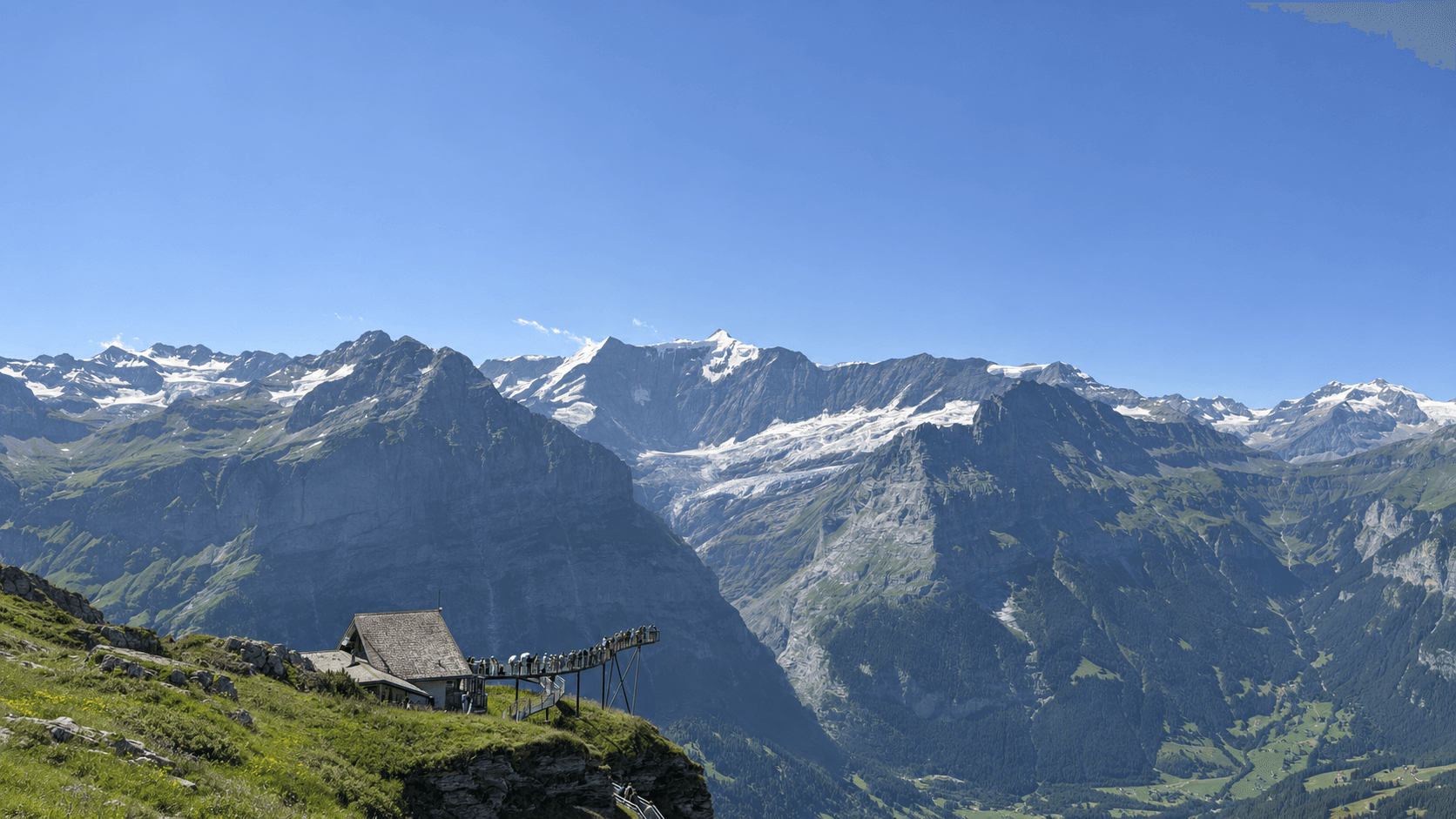



Role: Product designer and developer
Team: Independent project
My focus: Multimodal interaction design, system orchestration, development, and field testing
Status: Built, deployed, and field-tested
Overview
I love exploring new places, but constantly searching for information takes me away from the experience.
I built Voice Field Guide to explore a more natural way to learn about the world: point your camera at something interesting, hear an explanation, and ask questions through voice.
Challenge
How can an AI guide understand what someone is looking at and turn that context into a natural, reliable conversation?
The challenge was connecting visual recognition, location, and speech into one experience while handling uncertainty and keeping interactions simple.

Multimodal system model
I designed a multimodal flow that combines:
- Camera: Captures what the user is looking at.
- Location: Provides geographic context through GPS and OpenStreetMap.
- AI: Interprets the context and generates explanations.
- Voice: Delivers responses and supports follow-up questions.



Key decisions
Ground recognition in real-world context
Vision models can struggle to identify similar-looking natural landmarks.
I combined camera input with geographic context to make recognition more reliable and explanations more relevant.
Communicate uncertainty clearly
AI can generate convincing explanations even when identification is incorrect.
I designed the guide to acknowledge uncertainty when the available evidence is insufficient, rather than presenting assumptions as facts.
Create a reusable exploration model
I introduced three perspectives that work across different places:
- Why here? History and geographic context.
- What people miss Overlooked details and design choices.
- How it works Engineering, geology, and construction.
This keeps the interaction consistent while adapting explanations to the subject.
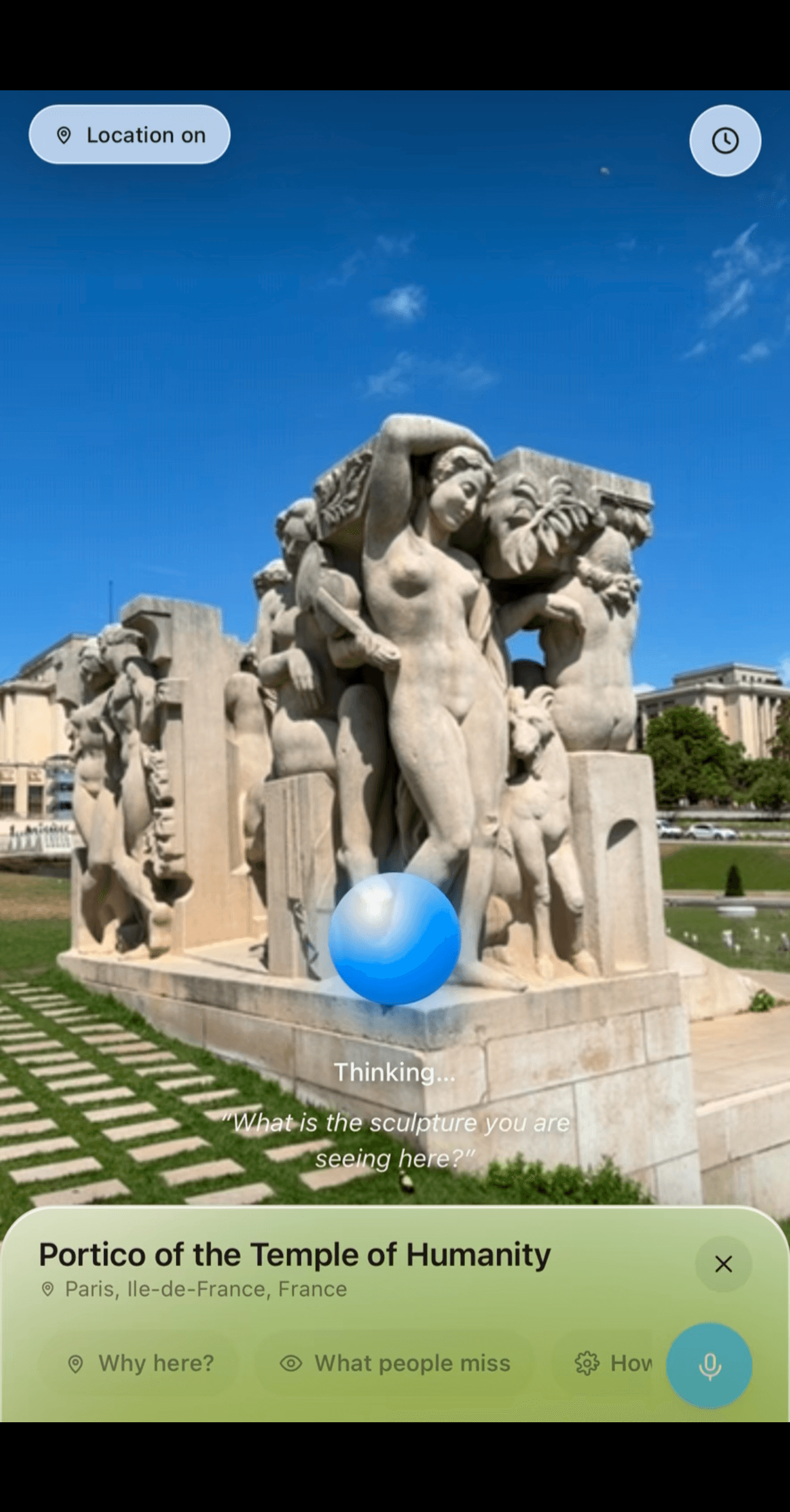
Building the experience
I built and deployed the application using Next.js and TypeScript, integrating vision, geographic data, language generation, speech-to-text, and text-to-speech.
The main implementation challenge was coordinating these capabilities into a continuous conversational experience, from capturing context to delivering spoken answers and handling follow-up questions.
What field testing revealed
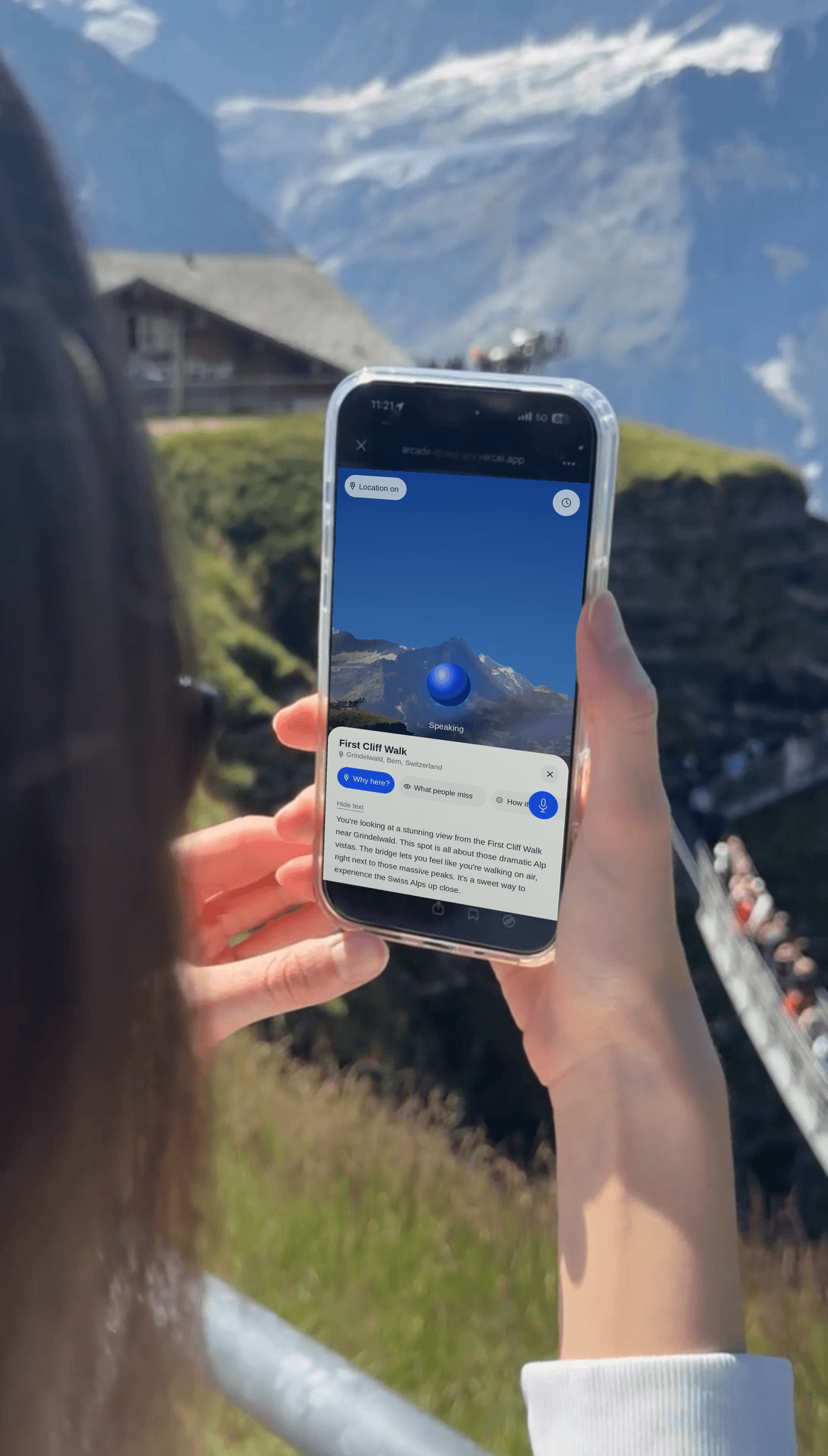
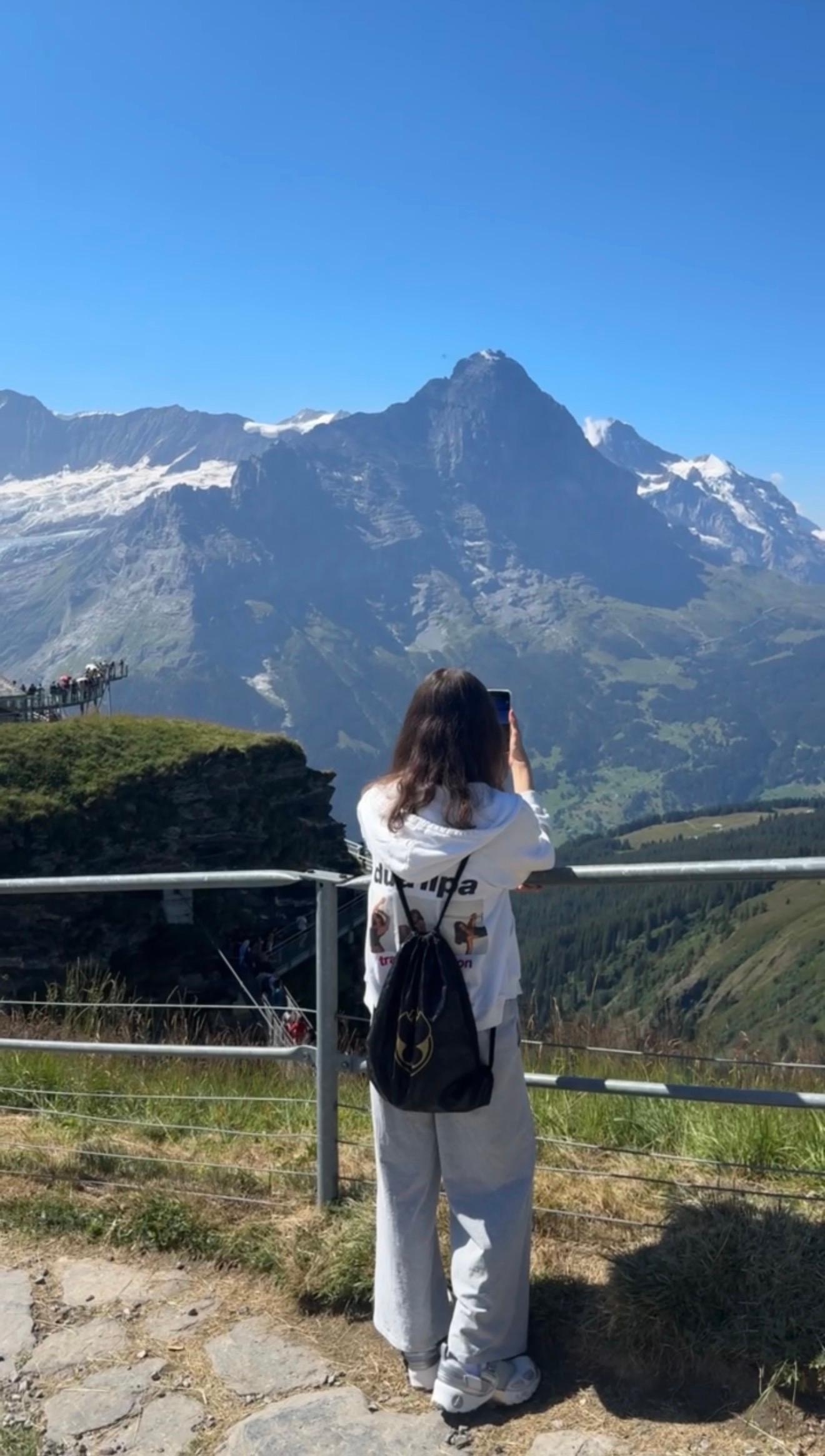
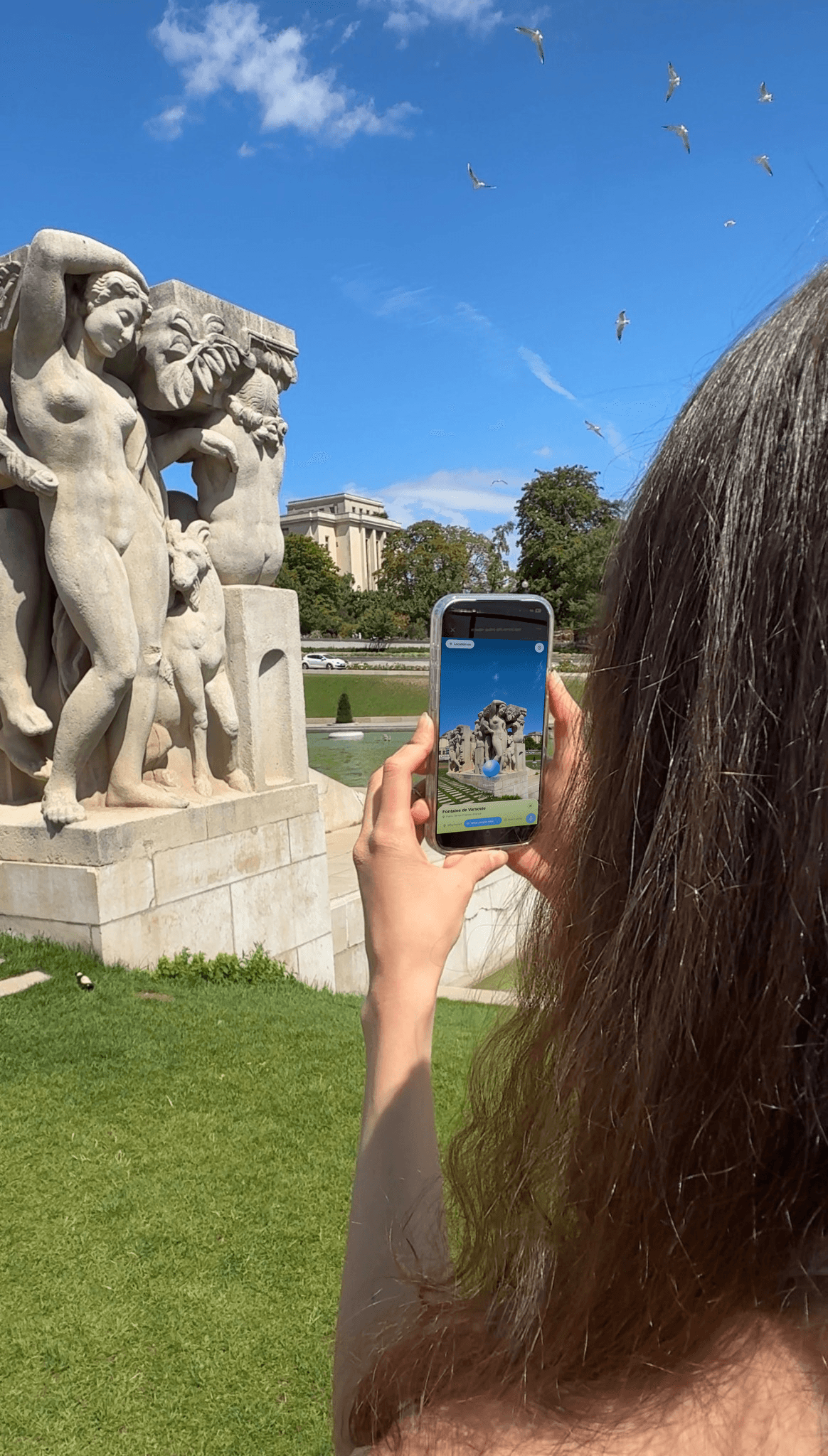
I tested the prototype in the Swiss Alps and Paris, exploring natural landscapes, sculptures, and built structures.
Field testing exposed recognition challenges with visually similar natural features and reinforced the importance of geographic grounding and uncertainty handling.
Outcome: Designed, developed, and deployed a functional multimodal AI guide, tested in real-world environments.
Next steps
- Improve recognition accuracy for ambiguous landmarks.
- Reduce response latency and improve conversational flow.
- Test with more travelers to validate usability and usefulness.
