Homewise
Helping homeowners choose contractors with confidence.
Homewise is an AI agent that helps homeowners define repair needs, compare contractors, and schedule a visit.


Role: Product designer
Team: Product managers and engineers
My focus: User research, interaction design, usability testing, and code-first prototyping
Status: MVP prototype
Overview
I owned the experience from initial intake and scope definition through contractor comparison and scheduling, combining research with interaction design and a working prototype.
Challenge
Finding a reliable contractor is stressful. Homeowners often struggle to explain the work they need, compare quotes, and know whom to trust.
An AI recommendation introduces another question: what information helps someone decide whether to act on it?
How might we simplify contractor hiring while keeping homeowners informed and in control?

What research revealed
Research highlighted an early barrier: homeowners often struggled to define the work before they could compare contractors. This shifted the approach toward helping users clarify their needs first.
I also tested five trust hypotheses through usability sessions. Two observations challenged how recommendations were presented:
- Confidence score: Two participants ignored it; two questioned it.
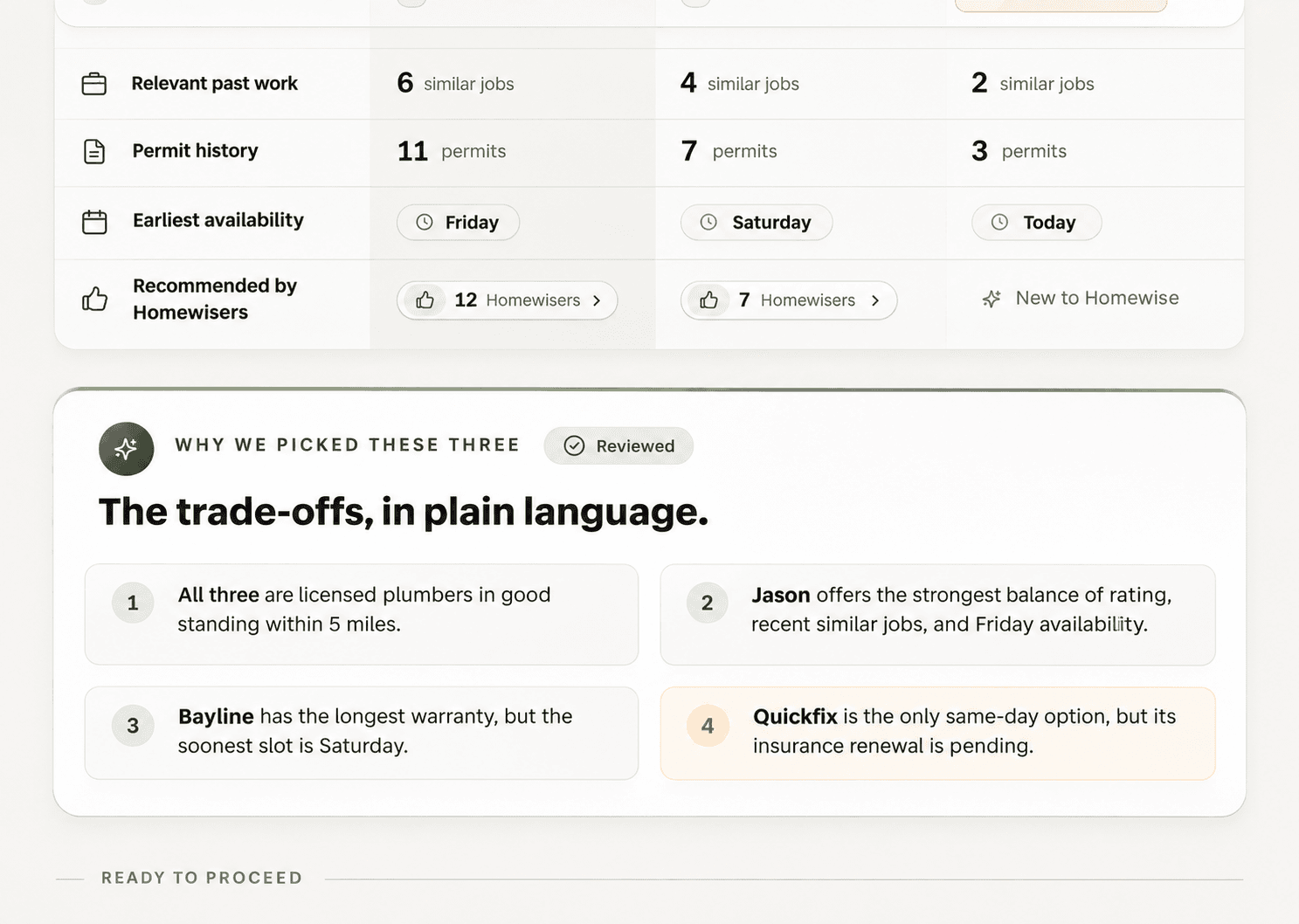
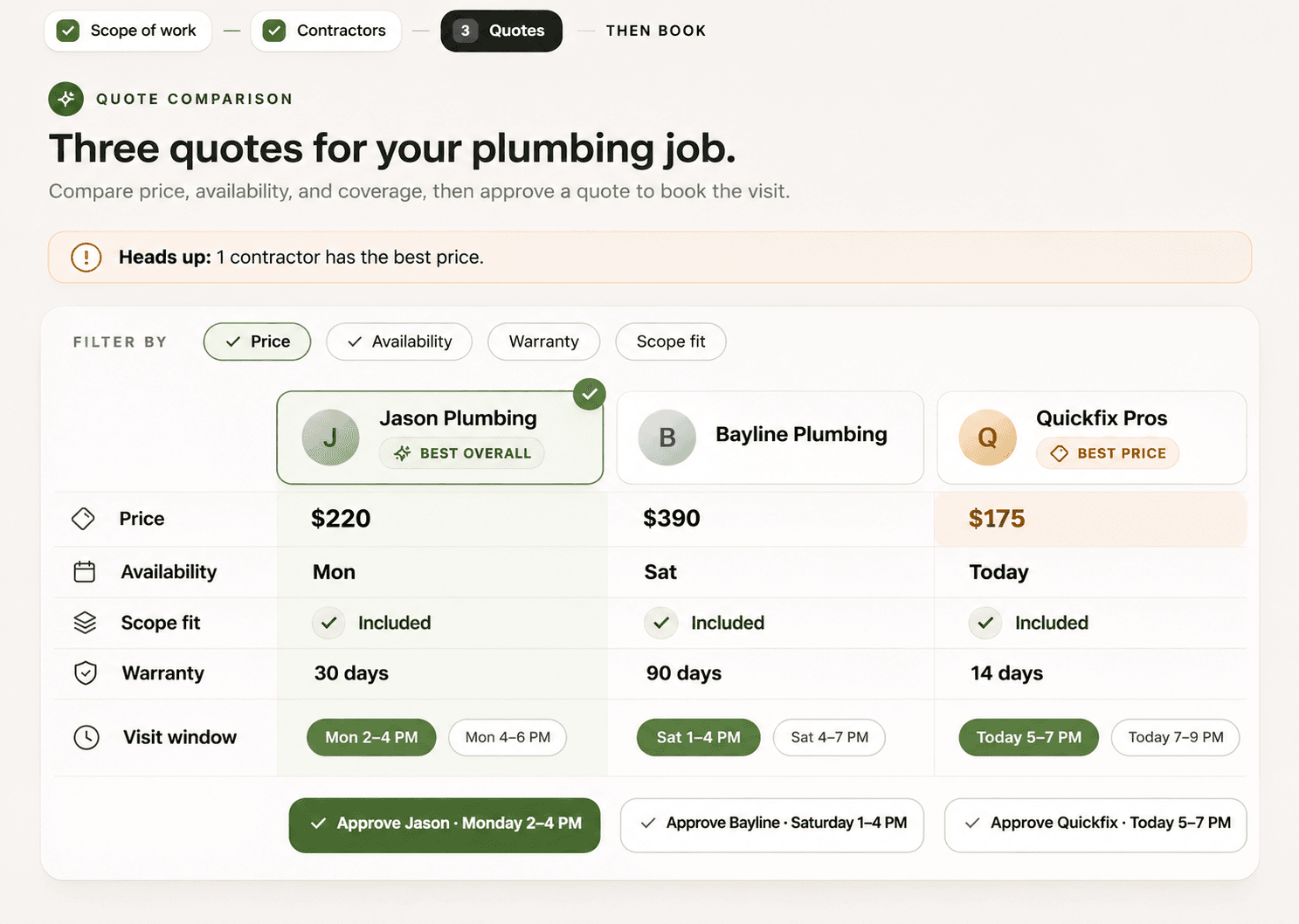
- Match reasoning: Two participants missed the explanation because it sat below the comparison table.
These findings pointed toward clearer scope, relevant evidence, and reasoning visible where users make decisions.
Decisions shaped by research
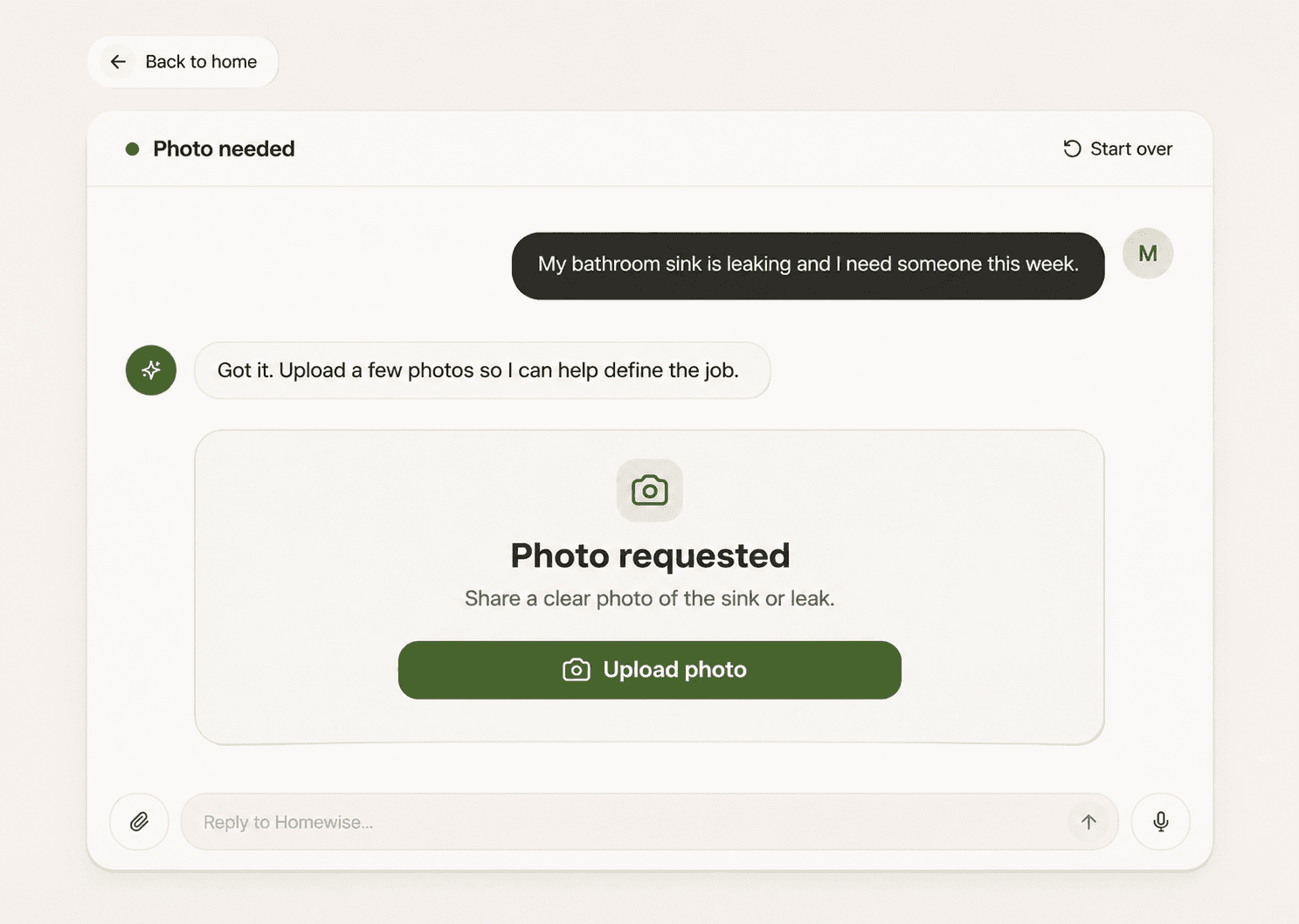
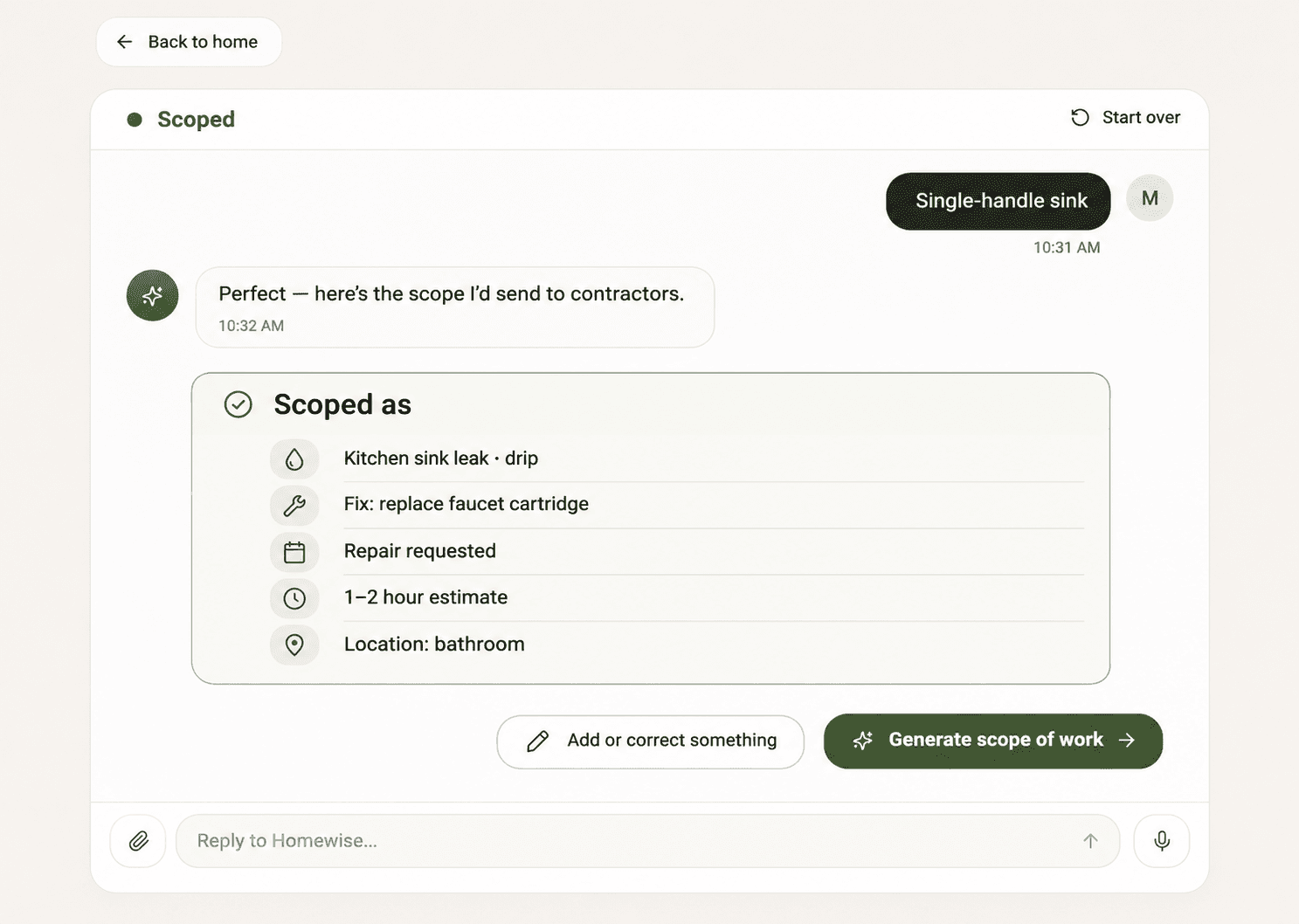
Define the work before finding contractors
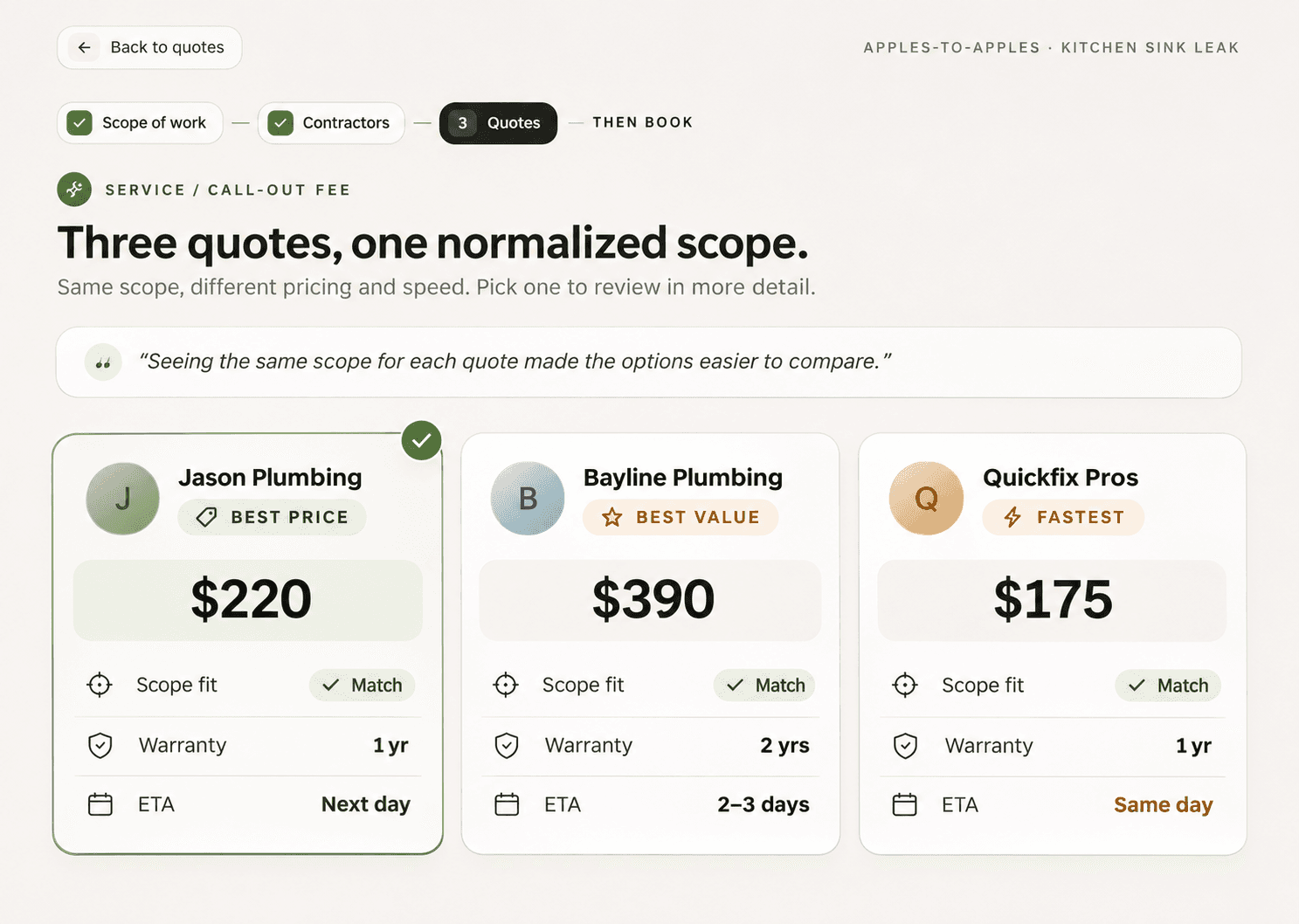
I designed a conversational intake that guides homeowners from an initial problem or photo to a clearer scope of work.
The aim was to give contractors a better starting point and help homeowners compare quotes for the same job.
Make the recommendation easier to evaluate
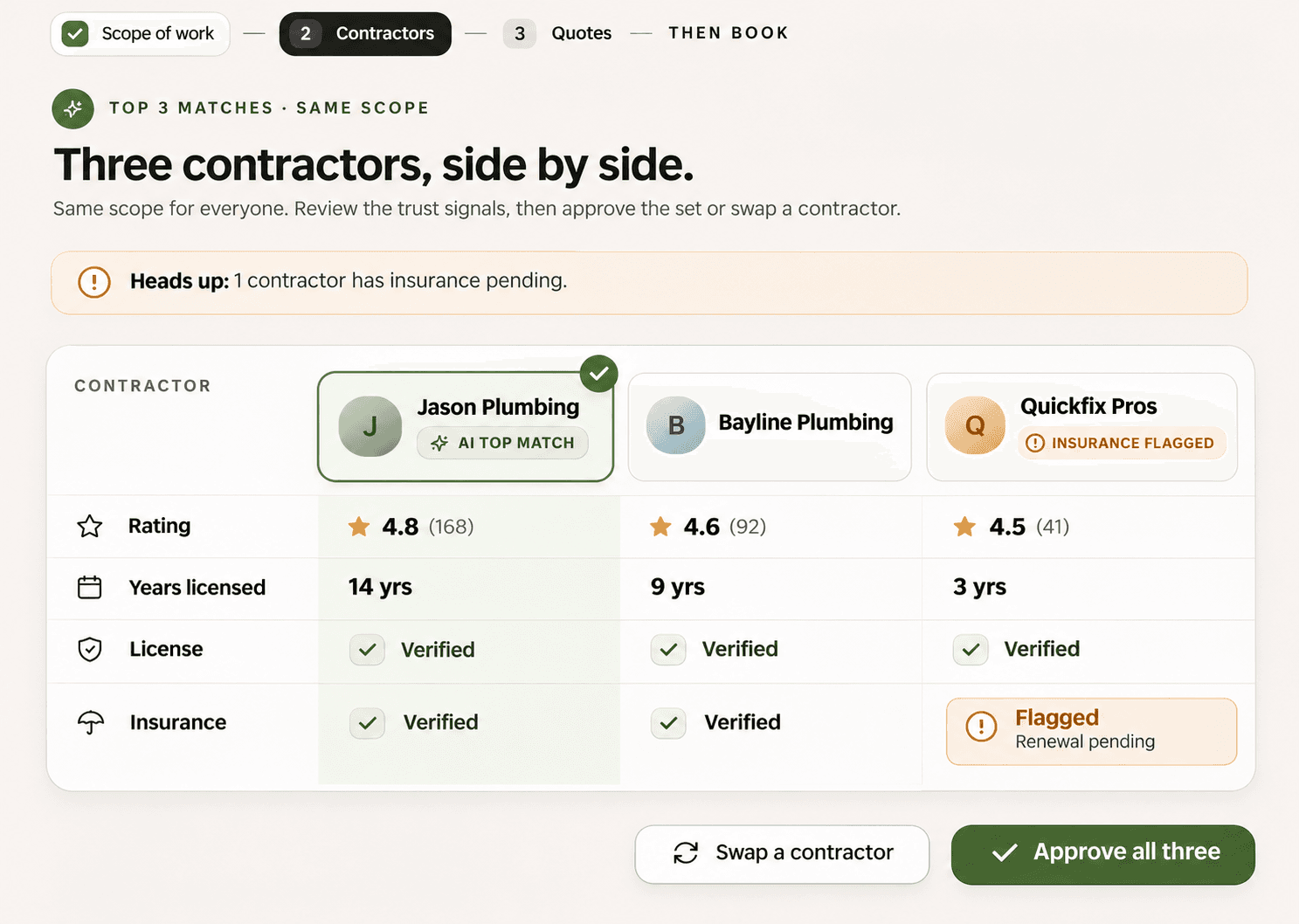
Research suggested that trust needs varied by situation. I proposed progressive disclosure: a clear recommendation and relevant match signals first, with deeper evidence available when users need to verify or compare.
Usability findings also highlighted the need to place reasoning alongside the comparison, where users were evaluating their options.
Keep agent actions understandable and controllable
I introduced a simple principle: users should understand what the agent recommends, what it is doing, and when their approval is required.
The goal was to let the agent support coordination while keeping consequential decisions with the homeowner.
Prototyping the hiring journey
Tools: React, Next.js, Claude Code, GitHub
Alongside the research, I built a prototype in React and Next.js with Claude Code, covering intake, contractor comparison, and scheduling.


Building in code helped me explore interaction behavior across the journey and refine how the steps connected.
Outcome and next steps
The work produced an MVP prototype and a clearer direction for improving contractor recommendations.
The usability findings led me to question the value of an abstract confidence score and prioritize evidence homeowners could understand and evaluate.
Next steps: Refine how evidence appears alongside contractor recommendations and retest the complete decision and approval flow.
